
Calcium Chloride
Calcium Chloride is a highly versatile and effective chemical compound, commonly used in a variety of applications across different industries. It is primarily known for its role in de-icing and dust control, where it is widely used as an ice melt salt. In addition to its function in winter maintenance, Calcium Chloride is also used in the production of concrete, oil drilling, and as a drying agent in various processes. Its ability to absorb moisture makes it essential for many industrial and agricultural applications.
Petro Nour Mehr Company has successfully exported Calcium Chloride to multiple countries at competitive prices, securing a significant share in the global market.
If you are looking for the best Calcium Chloride prices or detailed information about Calcium Chloride Chemical pricing and purchasing options, feel free to contact the sales department of Petro Nour Mehr Company for the latest updates and offers.
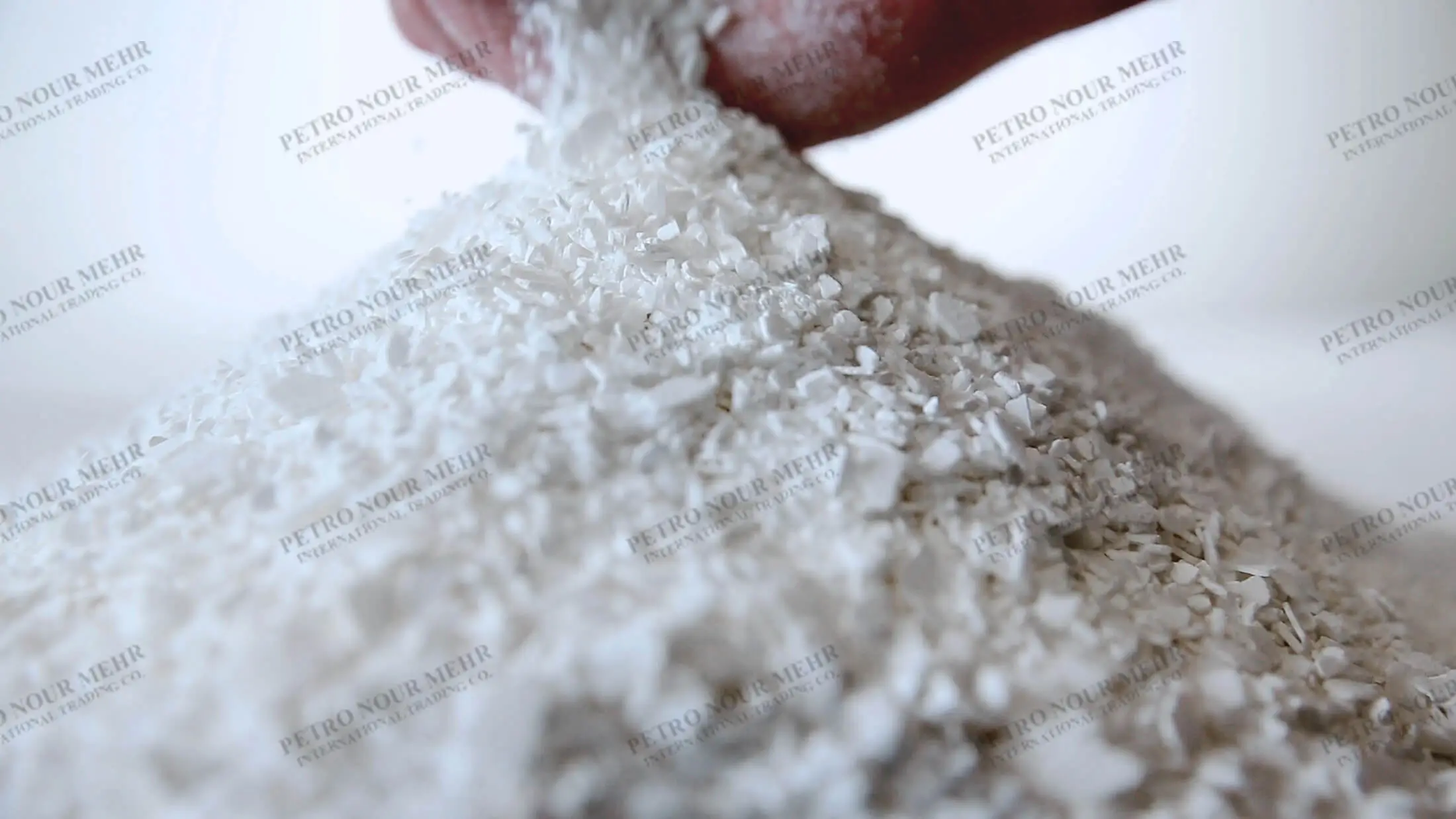
Calcium Chloride Manufacturers in Iran
Some of the most well-known and reputable factories in Iran are leading producers of Calcium Chloride Chemical, contributing significantly to both domestic and international markets.
These units are among the largest Calcium Chloride producers in Iran and play a significant role in meeting domestic needs and exporting this product to global markets at competitive prices.
Applications of Calcium Chloride
Calcium Chloride is a highly versatile chemical with a wide range of applications across various industries. Some of its primary uses include:
- Roads and Highways: This material, like sodium chloride, is used to create mass and increase friction on roads by reducing the freezing point of ice. When calcium chloride dissolves, an exothermic reaction occurs, generating heat. It is commonly used as Calcium Chloride ice melt in winter maintenance.

- Food Industries: This material is commonly used as a food additive in the food industry. This compound is added to food products such as cheese, tofu, canned fruits, and vegetables to firm and solidify their texture.

- Construction: In construction projects, adding Calcium Chloride Chemical to concrete can accelerate the curing of materials at lower temperatures. This additive can increase the curing rate to some extent at temperatures lower than that of regular concrete.

- Drilling: This material is widely used in oil well drilling as it can regulate the density of drilling fluids and assist in controlling pressure. Additionally, it can act as a solid dust absorber in drilling environments and facilitate mud disposal.

- Moisture Control: It acts as an active moisture absorbent and can absorb moisture to the extent that it turns into liquid brine. This property makes it useful as a moisture-absorbing agent for controlling moisture in various environments.
In conclusion, the use of Calcium Chloride in various industries, including drilling, food industries, and construction, is very common and has diverse effects on these industries.
As one of the top Calcium Chloride producers, we offer Calcium Chloride at competitive prices for all your needs. However, caution is needed in its use, and sufficient knowledge about its properties and proper usage is essential to prevent health and environmental issues.
Storage Conditions for Calcium Chloride
There are some guidelines for better preservation of its quality:
- Ideal Storage Environment: It is ideal to keep these materials dry and cool; a temperature of less than 25 degrees Celsius is preferable for storage.
- Protection from Light: Keep this material out of direct sunlight and ultraviolet light, since these sources of light may alter its chemical and physical characteristics. These substances react with acids and solvents, among other compounds. It is therefore recommended to stay away from direct contact with these kinds of compounds.
- Protection During Storage and Transportation: During storage and transportation, ensure that this material is protected from scratches and impacts, as physical damages can lead to changes in its structure and chemical properties.
- Packaging Requirements: Packaging for this grade should be made of suitable material to protect it from environmental changes and reduce the penetration of water and air into the packaging.
- Special Storage Conditions: Certain items can need particular storage conditions. Consult the manufacturer’s directions in this situation.
By adhering to these storage guidelines, the integrity and effectiveness of ice melt salt can be maintained for safe industrial use. If you require more details about Calcium Chloride Price or need the best prices for Calcium Chloride products, trusted suppliers can offer updated information on pricing and availability.

Packaging for Calcium Chloride
For packaging and exporting Calcium Chloride ice melt, various methods can be employed depending on environmental conditions, product requirements, and transportation facilitation for export. The following are some typical ways that Calcium Chloride and Calcium Chloride products are packaged and exported:
- Packaging in Jumbo Bags: This method is common for packaging Calcium Chloride powders, where the powders are packed into large bags with varying capacities (usually between 500 to 2000 kilograms). These bags are appropriate for air, sea, and road transportation in addition to protecting the product from contamination and moisture.
- Packaging in Small Bags: In this method, Calcium Chloride Chemical is packed into smaller bags with capacities of approximately 20 to 25 kilograms.
- Use of Pallets: Calcium Chloride powders are often shipped on large pallets.
Choosing the right packaging and exporting strategy for this Calcium Chloride powder can be accomplished with such international packaging standards, labeling, and transportation requirements followed.
It’s crucial to think about protecting the product from environmental deterioration, shocks, and humidity while it’s being transported. If you need the best Calcium Chloride Price, trusted suppliers can offer updated information on availability and pricing.
Producing Products Using Calcium Chloride at Manufacturers
In various industries, this material producers such as Occidental Petroleum and Tata Chemicals utilize this material as a crucial raw material in their production processes. Occidental Petroleum specializes in producing high-quality Calcium Chloride for use in oil and gas drilling, well completion fluids, and de-icing applications.
Meanwhile, Tata Chemicals, a global leader in Calcium Chloride production, supplies essential materials for applications such as dust control, concrete acceleration, and water treatment. The competitive Calcium Chloride price offered by these producers reflects their operational efficiency and commitment to meeting both domestic and international market demands.
Calcium Chloride Characteristics
Calcium Chloride (CaCl₂) is a white, odorless, highly soluble salt that is commonly available in both anhydrous and hydrated forms. It is highly soluble in water, releasing heat in the process, and it can also dissolve in alcohols and acetone. This material is hygroscopic, meaning it readily absorbs moisture from the air, which makes it effective in applications such as de-icing and dust control.
With a molecular formula of CaCl₂ and a molecular weight of 147.01 g/mol, Calcium Chloride Chemical is widely used in various industries. It has a melting point of around 772°C for the anhydrous form, and its properties make it a useful material in applications such as road de-icing, concrete acceleration, industrial refrigeration, and water treatment. Calcium Chloride’s chemical structure and properties provide it with versatile uses across different sectors like construction, agriculture, and chemicals, making it an essential raw material in numerous industrial processes.
Advantages and Disadvantages of Calcium Chloride
Advantages
- Versatility: This material is a highly versatile chemical used across various industries such as construction, road de-icing, water treatment, and food processing. Its ability to absorb moisture and its wide range of applications make it an essential compound in several sectors.
- Effective De-Icing Agent: One of the most well-known advantages of this material is its use as an effective de-icing agent. It works well in extremely low temperatures, helping to melt ice and snow faster than other salts, ensuring safer road conditions in winter.
- Concrete Accelerator: This material is widely used as an accelerator in the curing of concrete. It helps to speed up the hardening process, making it useful in construction projects, especially in colder climates.
- Hygroscopic Nature: Due to its ability to absorb moisture, this material is used in various industrial applications, including desiccants and drying agents, making it valuable for applications requiring moisture control.
- Water Treatment: It plays an important role in water treatment processes, helping to coagulate impurities and clarify water, making it a critical component in municipal and industrial water treatment facilities.
Disadvantages
- Corrosiveness: This material can be corrosive, especially to metals and concrete. This can be a significant issue in applications such as de-icing, where it may damage the surfaces it comes into contact with.
- Health Risks: While generally safe, this material can be harmful if inhaled or ingested in large quantities. Proper handling and personal protective equipment (PPE) are necessary to prevent exposure to the skin, eyes, and respiratory system.
- Environmental Impact: Overuse or improper disposal of this material, especially in de-icing, can lead to environmental issues, including soil and water contamination. It is important to apply it judiciously and follow proper waste disposal practices.
- Dust Hazard: This material powder can be a dust hazard during handling, requiring proper dust control measures to avoid respiratory issues for workers.
- Expensive in Bulk: When purchased in large quantities, this material can be more expensive than other de-icing agents, particularly in warmer climates where it may not be used as frequently.
In summary, this material offers a wide array of benefits, especially in applications like de-icing, concrete curing, and moisture control. However, its corrosive nature and potential environmental impact mean that it must be used and disposed of responsibly. Businesses should stay updated on this material prices and consult reliable suppliers for competitive pricing.
Physical and Chemical Properties of Calcium Chloride
This material exhibits several physical and chemical properties that make it an essential material in various industrial applications:
Physical Properties
- Appearance: This material is a white, odorless, crystalline solid that is highly hygroscopic.
- Melting Point: The melting point of anhydrous this material is approximately 772°C, while the hydrated form melts at around 30°C.
- Boiling Point: Calcium Chloride decomposes before boiling at around 1,935°C, making it stable at high temperatures.
- Solubility: This material is highly soluble in water, releasing heat during the dissolution process. It is also soluble in alcohols, acetone, and other polar solvents.
- Density: It has a high density of around 2.15 g/cm³ for the anhydrous form.
Chemical Properties
- Reactivity: This material is highly reactive with water and releases heat when dissolved, which is a critical property in applications such as de-icing and moisture control.
- Hygroscopic Nature: This material is hygroscopic, meaning it readily absorbs moisture from the air, making it valuable in applications like desiccants and drying agents.
- Corrosiveness: The compound is corrosive to metals and concrete, which requires careful handling and consideration when used in construction and de-icing.
- Stability: This material is stable under normal conditions, though it can degrade if exposed to excessive moisture or extreme conditions.
- Toxicity: While generally safe for industrial uses, this material can cause irritation to the skin, eyes, and respiratory system. Proper protective equipment is recommended to ensure safe handling.
These properties make this material a vital material in a wide range of industries, including road de-icing, concrete acceleration, water treatment, and food processing. To ensure safe and effective use, proper handling, storage, and disposal are essential.
Types of Calcium Chloride Grades
This material is available in the market in various grades, primarily classified based on purity and different applications:
- Food Grade Calcium Chloride: This high-purity Calcium Chloride chemical is used in the food industry for applications such as improving shelf life, preventing freezing in fruit juice and beverage industries, and in the production of protein products like eggs and dairy.
- Pharmaceutical Grade Calcium Chloride: This grade has very high purity and is used in the pharmaceutical industry for the production of drugs, vitamins, dietary supplements, and other health-related products. It must meet strict pharmaceutical standards.
- Technical Grade Calcium Chloride: This grade is used for non-industrial purposes, such as water treatment and research processes. It has lower purity and is generally cheaper than other grades.
Comparison of Different Grades of Calcium Chloride
Different grades of Calcium Chloride vary in purity and applications. The Technical Grade has lower purity and is typically used in non-industrial applications such as water treatment and research processes. The Food Grade has a higher purity and is commonly used in food industries, ice melt salt applications, and drinking water treatment.
The Pharmaceutical Grade has the highest purity and is used in pharmaceutical products, ensuring compliance with strict health and safety standards.
How to buy Calcium Chloride?
- Buy from a reputable and authorized supplier that holds necessary certifications and guarantees quality.
- Compare the prices of these materials in different markets and compare them with the global market price.
- Examine the sales conditions regarding quantity, delivery time, packaging, transportation methods, and payment terms.
- If you intend to import Calcium Chloride from foreign countries, investigate customs and legal regulations and comply with export and import regulations.
- Contact Petro Nour Mehr Company to obtain the most suitable export price based on your conditions.
- After signing the contract, you can place your order.
- Secure and suitable payment methods according to customer preferences are provided by the company.
- Then, the loading stage is completed by selecting and introducing a transport company.
- Necessary documents for customs clearance at the destination city are also provided to customers by Petro Nour Mehr Company.
- sales@petronourmehr.com
- +98 219-100-7557
For all inquiries, please don’t hesitate to contact our sales department using the form below.