
GPPS (General Purpose Polystyrene)
GPPS, or General Purpose Polystyrene, is a clear and versatile material used in many industries. It is perfect for making food packaging like foam trays for fruits, meat, and eggs, as well as for household products such as shower cabinets, heat insulation boards, and lighting films. GPPS is also used in special extrusion processes, including XPS sheets and plates, making it ideal for both everyday and industrial applications.
This material is easy to work with and provides a high-quality finish, making it suitable for disposable cups, food containers, petri dishes, office supplies, and parts for home appliances. Whether you need it for packaging, household items, or specialized industrial uses, GPPS ensures reliable performance and excellent results.
To obtain more precise information on Polystyrene (PS) prices or product purchases, it is better to contact the Petro Nour Mehr Company’s sales department.
Analysis of GPPS grades
You can find the list of GPPS products in the table below:
To view other polymer products, you can click here.
GPPS Manufacturers in Iran
In Iran, prominent producers of General Purpose Polystyrene (GPPS) include Tabriz Petrochemical, Takhte Jamshid Petrochemical, Tadbir Fanan Gostar Petrochemical, Esin Plastic Company, Artan Petro, and Petropak Petrochemicals, among others. These companies are among the largest GPPS manufacturers in the country and play a key role in meeting domestic demand and exporting GPPS to international markets.
Applications of General Purpose Polystyrene (GPPS)
General Purpose Polystyrene (GPPS) is a versatile thermoplastic with excellent clarity, rigidity, and processability, making it suitable for a wide range of applications. Below are its primary uses:
Extrusion and Insulation Applications: Insulation sheets and special extrusion, XPS sheets and plates, Embossed extruded sheets for food applications, Foam sheets for fruits trays, Insulation boards
Household and Consumer Applications: Shower cabinets and shower room parts, Lighting thin films, Heat insulation boards, Foam fruit trays, meat trays, and egg boxes
Food Contact Packaging: Packaging applications for cups, dishes, and trays; Dairy sheets and food containers; Disposable cups

Specialty Applications: Crisper boxes for refrigerators, Petri dishes and packaging articles, Optical parts, tableware, and drinking cups, Plastic bangles and cosmetic packing components
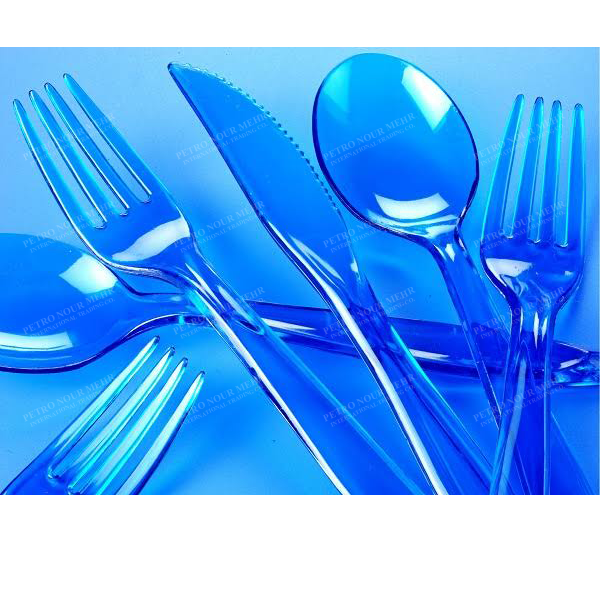
Injection Molding Applications
Parts for home electrical appliances, Office stationery and equipment, Toys and household containers
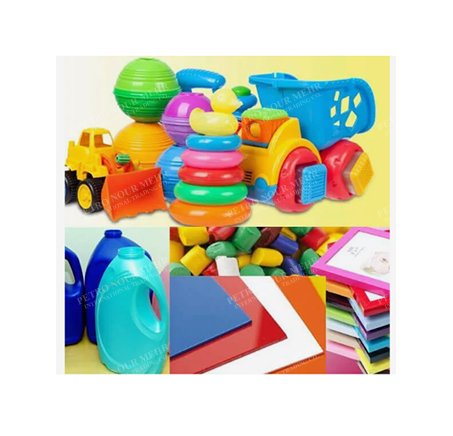
Industrial and Commercial Applications
Foamed PS for thermoforming and extrusion; Co-extrusion applications with anionic styrene-butadiene copolymer dilution; Direct-gas foamed trays for industrial use
Office and Stationery Products: Packaging supplies and pen barrels, CD boxes, and gloss layer coextrusion. GPPS’s excellent processability and clarity make it a preferred material for extrusion, injection molding, and packaging applications, ensuring reliability across multiple industries.
Storage Conditions for HIPS:
These polymer materials can be stored under various conditions, but there are some guidelines for better preservation of their quality:
- It is best to store these materials in a cool and dry environment, with the optimal storage temperature being below 50 degrees Celsius.
- Protect the material from direct sunlight and UV light, as these lights can cause changes in its physical and chemical properties.
- GPPS and HIPS react with certain chemicals, such as solvents and acids. Therefore, it is better to avoid direct contact with these types of materials.
- Make sure the material has protection from impacts and scratches while being stored and transported, since physical harm may cause modifications to its mechanical and structural characteristics.
- The packaging of these materials should be made of suitable materials that protect against environmental changes and prevent water and moisture penetration into the packaging.
For some specific products, special storage conditions may be required. In this case, refer to the manufacturer’s guidelines.
Packaging for HIPS:
This material granules can be packaged and exported using a variety of techniques, depending on the product’s needs, the environment, and ease of export shipping. Below are some common methods for packaging and exporting polystyrene granules:
- Packaging in Jumbo Bags: This method is common for packaging GPPS and HIPS granules, where the granules are packed into large bags with varying capacities (usually between 500 to 2000 kilograms). These bags, besides protecting the product from contamination and moisture, are suitable for road, sea, and air transportation.
- Packaging in Small Bags: In this method, the granules are packed into smaller bags with a capacity of about 20 to 25 kilograms.
- Use of Pallets: Polystyrene granules are usually packed on large pallets for transportation purposes.
When choosing the right packaging and export techniques for GPPS and HIPS granules, meeting international packaging standards, labeling, and transportation requirements can be essential. Ensuring that the product is protected during shipment against shocks, moisture, and environmental damage is also crucial.
How much we know about GPPS:
This material is one type of styrene polymer known as a plastic material. The characteristics of GPPS include:
- Because of its pure structure, it has excellent transparency, making it suitable for use in product packaging where content visibility is required.
- This polymer is very lightweight, making it suitable for products requiring light weight, such as food packaging.
- Because this material has a sufficient mechanical resistance, it can be used to produce industrial goods, home appliances, and automotive parts.
- Because of this polymer’s high processing capabilities, a variety of parts can be produced using injection molding, foam molding, and other plastic production techniques.
- One of the attractive features of this material is its reasonable price, making it a cost-effective choice for many applications.
Packaging, home appliances, car parts, cable protection, personal hygiene and cosmetics, kids’ toys, and electronics are among the industries where GPPS is used. This polymer’s qualities make it a useful plastic material utilized in a variety of industries.
How much we know about HIPS:
Styrene serves as the primary monomer in the thermoplastic polymer known as this material. This specific polymer has characteristics like impact resistance, lightweight, and hardness. It is a material that is widely utilized in many different industries, such as packaging, electronics, and the manufacture of automobile parts. Furthermore, this polymer is widely employed in various sectors because to its excellent processing capabilities during injection and extrusion procedures.
The characteristics of HIPS include:
- This material has a high impact resistance and is therefore appropriate for use in parts that are subjected to impacts because of the presence of certain additives.
- When compared to polyethylene and polypropylene, this polymer is stronger and comparatively rigid.
- It exhibits good chemical stability and resistance to many chemicals, making it suitable for use in chemical environments or parts in contact with chemicals.
- This polymer is one of the materials that can be utilized in a variety of sectors since it is simple to process and create using different techniques like injection molding, extrusion, etc.
- Because of its strong colorability, HIPS can be used for sections that need to be colored.
- It is one of the cheaper polymers used for plastic parts production, making it an economical choice for many applications.
In general, HIPS is utilized in a wide range of industries, including the automotive, packaging, electronics, and more, because of its impact resistance, processability, and affordability.
Comparison between GPPS and HIPS:
High Impact Polystyrene (HIPS) and General Purpose Polystyrene (GPPS) are two different types of polystyrene with distinct properties and applications. Here’s a comparison between the two:
1) Impact Resistance:
- HIPS: It is designed to have enhanced impact resistance compared to GPPS. It contains rubber additives that improve its toughness, making it suitable for applications where impact strength is important.
- GPPS: This material has lower impact resistance compared to HIPS due to its lack of rubber additives. It is more brittle and prone to cracking under stress.
2) Transparency:
- HIPS: It is inherently opaque or translucent due to the presence of rubber additives. It is not as transparent as GPPS.
- GPPS: It exhibits high clarity and transparency, making it suitable for applications where optical clarity is desired, such as in clear packaging or optical lenses.
3) Rigidity:
- HIPS: While this material is tougher and more impact-resistant, it is generally less rigid compared to GPPS. It may exhibit some flexibility depending on the amount of rubber additives.
- GPPS: It is rigid and stiff, making it suitable for applications requiring dimensional stability and stiffness, such as in rigid packaging or structural components.
4) Processing:
- Both HIPS and GPPS can be processed using similar methods such as injection molding, extrusion, and thermoforming. However, HIPS may require slightly higher processing temperatures due to the presence of rubber additives.
5) Applications:
- HIPS: Common applications of this material include packaging materials, disposable utensils, toys, refrigerator liners, and automotive interior parts where impact resistance and toughness are important.
- GPPS: It is often used in applications requiring optical clarity and high surface gloss, such as in food packaging, optical lenses, cosmetic packaging, and household appliances where transparency is desired.
Overall, the choice between HIPS and GPPS depends on the specific requirements of the application, with HIPS being preferred for impact-resistant applications and GPPS for applications requiring optical clarity and rigidity.
How to buy GPPS?
- Buy from a reputable and authorized supplier that holds necessary certifications and guarantees quality.
- Compare the prices of these materials in different markets and compare them with the global market price.
- Examine the sales conditions regarding quantity, delivery time, packaging, transportation methods, and payment terms.
- If you intend to import GPPS from foreign countries, investigate customs and legal regulations and comply with export and import regulations.
- Contact Petro Nour Mehr Company to obtain the most suitable export price based on your conditions.
- After signing the contract, you can place your order.
- Secure and suitable payment methods according to customer preferences are provided by the company.
- Then, the loading stage is completed by selecting and introducing a transport company.
- Necessary documents for customs clearance at the destination city are also provided to customers by Petro Nour Mehr Company.
- sales@petronourmehr.com
- +98 219-100-7557
For all inquiries, please don’t hesitate to contact our sales department using the form below.