
Applications of Polyethylene in Rotational Molding
Versatile Polymers for Rotational Molding
Various types of conventional plastic resins may be used in the Rotational Molding process (also known as the rotomold process) to achieve the desired characteristics, depending on the final product’s application like producing water, fuel, and other tanks, boats, toys, traffic warning signs, etc.
Polyethylene is the most often used material for rotational molding. Polyethylene itself is classified into several types, such as low-density polyethylene (LDPE), high-density polyethylene (HDPE), and linear low-density polyethylene.
HDPE is frequently selected for rotational molding due to its favorable features. To begin, HDPE has good mold flow properties, which means it melts readily and uniformly covers the interior of the mold during the rotational molding process. This results in constant wall thickness and helps with the overall uniformity of the product.
Second, HDPE has excellent impact resistance and toughness, making it perfect for applications requiring endurance, such as the manufacture of tanks, containers, and outdoor items like boats or traffic signs. Its tolerance to chemicals, moisture, and environmental conditions makes it ideal for rotational molding applications.
Furthermore, HDPE is relatively lighter than other materials, allowing for the manufacture of lightweight yet strong pieces. Its recyclability and low cost make it a desirable choice for producers seeking environmentally friendly and cost-effective solutions.
Tabriz, Shazand, and Lorestan Petrochemical Companies are the largest manufacturers of raw materials for rotational grades. Petro Nour Mehr Co. can export raw materials used to manufacture a variety of products in various industries at the best possible prices and quality.
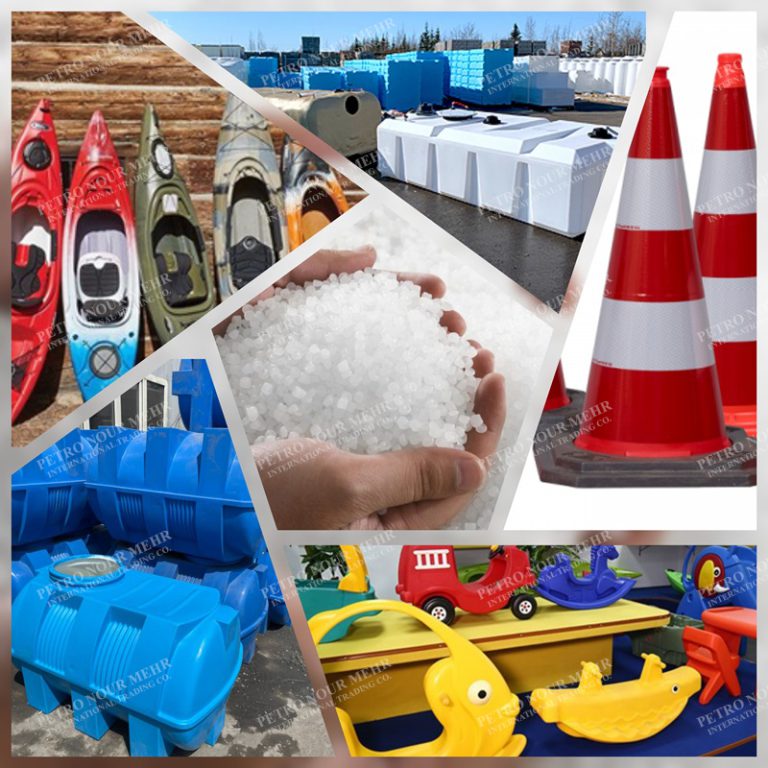
Analysis of Rotational grades
You can view our material catalog used for tanks, containers, toys, and other applications.
Petro Nour Mehr company can export raw materials required for manufacturing various products in the industries above at the best costs and with the greatest quality.
In addition, depending on the client’s requirements, we can provide raw materials in the form of compounds or powder. Petro Nour Mehr has a long background exporting the HD-3840UA grade compound.
Click on this link to see the other polymer materials Petro Nour Mehr can supply and export.
Applications of Rotational Molding
Rotational molding is the most effective method for producing hollow, large-scale plastic parts and components. Here are some typical applications using the rotational molding method: Tanks and containers include fuel, water, industrial, and recovery tanks, as well as toys, boats and canoes, and traffic warning signs.
Tanks and Containers
This technique has various benefits for tank and container manufacture. First of all, it enables the production of hollow components with complicated forms, lowering the danger of leakage and improving structural integrity. Second, rotational molding enables the immediate incorporation of elements like inserts and fittings into the component, which speeds up production and improves functioning. Furthermore, its design versatility allows for adjustment of wall thickness, material composition, and design aspects to fulfill unique needs. Finally, rotational molding’s scalability makes it cost-effective for both short and big production runs, meeting the demands of a wide range of sectors such as agricultural and chemical processing, and water treatment.
These advantages make rotomolding ideal for producing a variety of tanks and containers, including portable water tanks, fuel tanks, large agricultural tanks, small tanks, septic tanks, and other similar tanks.
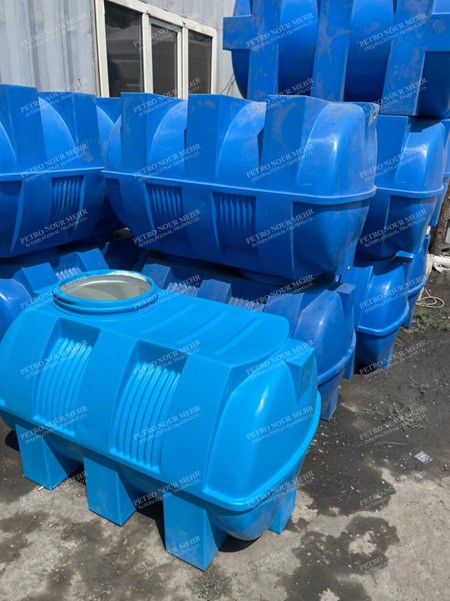
Using rotational molding to produce septic tanks

Water tanks produced by rotational molding process
Toys
Rotational molding is widely employed in the toy industry due to its versatility and cost-effectiveness. As said before, it allows for the production of complex shapes and designs, including intricate details and textures, enhancing the toy’s aesthetic appeal. Secondly, it enables the creation of durable yet lightweight toys, suitable for both indoor and outdoor play. Additionally, rotational molding permits the incorporation of features like handles, wheels, and internal compartments directly into the toy design. This process is scalable, facilitating efficient production of toys in various sizes and quantities, making it a preferred choice for toy manufacturers worldwide.
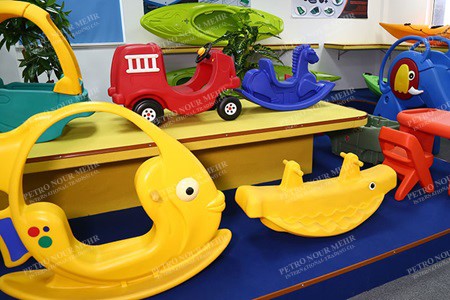
Using rotational molding to produce toys
Boats and Canoes
Rotational molding is a popular technology for making boats and canoes because it can produce smooth, hollow structures with complicated shapes. This continuous design maintains water tightness and improves structural integrity, which is critical for boats. The method results in lightweight yet strong boats, improving performance and fuel economy. Furthermore, its cost-effectiveness and scalability make it suitable for manufacturing boats and canoes of varying sizes and numbers to fulfill the varying demands of recreational and commercial uses.

Boats produced by a rotational molding process
Traffic Warning Signs
Rotational molding is an important technology for creating traffic warning signs because of its capacity to construct long-lasting, weather-resistant structures. Its structure assures durability and resistance to tough outdoor conditions including UV rays and high temperatures. Furthermore, rotational molding enables the insertion of reflective materials directly into the sign design, guaranteeing good visibility for drivers even in low-light settings.
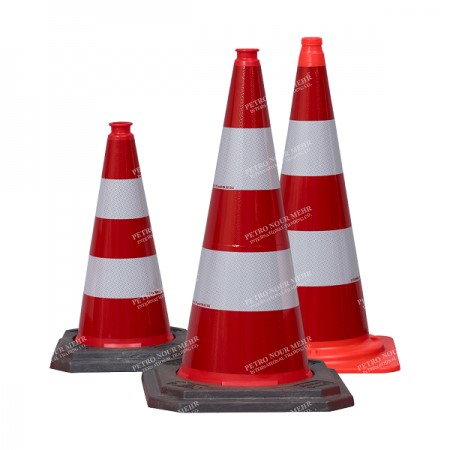
Rotational molding can be used to produce traffic warning signs
Snyder Industries, Inc. is one of the largest companies that manufacture various tanks and containers using rotational molding. This company manufactures a wide range of industrial products, from small to large, including chemical and agricultural tanks, septic tanks, water containers, medical waste containers, and a lot more.
It should be noted that Petro Nour Mehr Company can supply and export materials for any of those above and other applications.
Rotational Molding Procedure
The rotational molding process is a high-temperature, low-pressure method for producing plastics that uses heat and biaxial rotation to manufacture hollow, one-piece objects such as septic tanks, water tanks, toys, and any other plastic products having a hollow body.
The rotational molding method is really simple: A hollow mold that determines the final shape is filled with a light weight of plastic resin. The mold begins to rotate biaxially while also being heated in an oven. As a result of the heating, the resin melts and coats the mold walls. Immediately after that, the mold should be cooled so that the resin forms in its proper shape without deformation. Finally, the rotation stops and the mold is opened to release the finished product.

Schematic of rotational molding procedure
Advantages of Rotational Molding
Rotomolding offers various advantages over other molding methods, including:
Rotational molding can easily accommodate manufacturing complications because it takes the shape of the mold. As a result, complicated forms may be easily created, making it suitable for usage in a variety of industries.
Also, the size of the things is almost limitless, and tanks of all sizes, small, medium, and even huge, may be constructed. The primary advantage of generating varied sizes is that the tanks may be utilized for a variety of functions.
Another advantage of rotomolding is that because it is a pressure-free casting process, the molds may be very affordable. The low cost is for machining the mold. Finished elements such as colored plastics, internal pipes, and metal threads must be added before heating. This can save the producers time and money.
Furthermore, as compared to other molding techniques, rotomolding has the benefit of taking up less time. This makes it excellent for fast ordering.
Finally, rotational molding has little environmental impact. Rotomolding releases no chemicals or hazardous toxins, making it environmentally friendly.
Challenges in Rotational Molding
Common issues encountered during the cooling phase of rotational molding include warping and shrinkage, as well as maintaining uniform wall thickness. Rotational molding can also produce surface flaws such as surface roughness, flow lines, or visible weld lines, which can have an impact on the end product’s aesthetics.
To address these issues, mold design must be carefully considered. Optimizing the cooling process by focusing on cooling strategies can help to prevent potential shrinkage. Additionally, regulating the rotational speed and adjusting the oven temperature profile can help to achieve a more constant wall thickness. It is worth noting that utilizing high-quality resins and pigments specifically designed for rotational molding can substantially improve the surface finish.
You can find the best quality materials by contacting Petro Nour Mehr Company, which provides both quality and competitive pricing.
Quality Control in Rotational Molding
Quality control is essential to the rotational molding process, as it ensures that plastic products meet high-quality standards.
As previously stated, material selection is an important factor in production, which involves selecting high-quality resin, additives, and colorants to ensure uniformity. Careful mold design and maintenance are equally important for ensuring precise dimensions and surface quality. Another important consideration is temperature control, which determines wall thickness homogeneity and reduces the possibility of warping. Real-time modifications, enabled by continuous monitoring of variables such as temperature and rotating speed, ensure consistent manufacturing quality.
Furthermore, non-destructive testing methods used for routine evaluation of completed components aid in fault detection while preserving part integrity. While regulating environmental factors helps to reduce process variances, operator training is essential for understanding process variables and quality control measures. By considering these factors, manufacturers can consistently use rotational molding to create high-quality plastic items.
Innovations in Rotational Molding Technology
Significant advancements in rotational molding have increased its effectiveness and adaptability to a wide range of industries.
Nowadays, 3D-printed molds are used to shorten lead times and save money by accelerating design and prototyping. Foaming agents produce strong, lightweight parts with improved thermal insulation properties, making them ideal for a wide range of applications. Advanced heating technologies such as infrared radiation and hot air convection reduce heating cycles and improve temperature uniformity, lowering operating costs while also having a positive impact on the environment.
Such advancements confirm rotational molding as a leading production technique in the current market, accelerating progress in product design, manufacturing efficiency, and sustainability.
- Purchase from a trustworthy provider with credentials to ensure quality.
- Compare the pricing of these materials in various markets with the global market price.
- Examine the sales conditions, including quantity, delivery time, packaging, transportation methods, and payment terms.
- Contact Petro Nour Mehr Company to acquire the best export price according to your requirements.
- Petro Nour Mehr Company provides secure and suitable payment methods based on consumer preferences.
- It’s notable that our company has contact with several reputable transportation providers which can assist you find the best solutions.
- Also, the company provides customers with the necessary documentation for customs clearance in their final city.