
Applications of Polyethylene in Plastic Extrusion
Versatile Polymers for Extrusion
Extrusion is a process used in many industries to produce products with consistent properties. It involves forcing materials through a die to achieve the desired shape. Polyethylene, particularly High-Density Polyethylene (HDPE), is a versatile polymer with numerous applications in extrusion due to its unique characteristics. HDPE is well-known for its high strength-to-density ratio, chemical resistance, and durability, making it an ideal choice for extrusion projects.
The remarkable processability of polyethylene is one of the primary reasons for its widespread use in extrusion. When melted, polyethylene exhibits high fluidity, making it easy to feed through extrusion equipment and ensuring consistent product profiles. Furthermore, its high thermal stability and low viscosity during melting make it appropriate for a wide range of extrusion processes. Polyethylene offers significant cost savings and environmental benefits. Polyethylene is a financially viable option for extrusion production due to its widespread availability and low cost compared to other technical polymers.
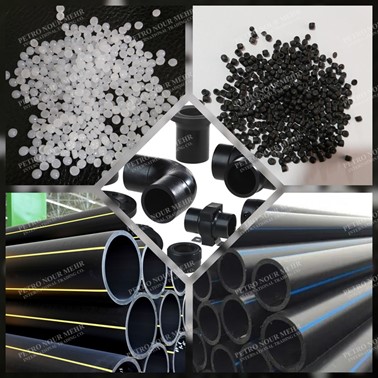
Importance of Material Selection
The material you choose for your project determines the extruded part’s overall functionality and manufacturability. The first step in choosing a polymer granule is to determine the properties that your part requires, such as strength, rigidity and flexibility, and resistance to chemicals and the environment. You can also save money by choosing a more common material that meets your product’s end-use requirements over one that is more exotic or uncommon.
Polyethylene (HDPE) Extrusion Grades
Amirkabir, Shazand, Jam Petrochemicals, and AryaSasol Polymer Companies are the largest producers of polyethylene polymer granules, which are widely used in mentioned products.
Analysis of Polyethylene (HDPE) Pipe Grades
The various materials used in extrusion for producing water and gas pipes are shown in the table below. These HDPE films will be exported with the HS code of 39012010.
You can also download the catalogue by clicking this button.
Analysis of Polyethylene (HDPE) Extrusion Grades
The table below shows the materials used in extrusion for producing different nets and tarpaulin. These HDPE films will be exported with the HS code of 39019000.
You can also download the catalogue by clicking this button.
Analysis of Polyethylene (LDPE) Extrusion Grades
The table below shows the materials used in extrusion for producing different nets and tarpaulin. These LDPE films will be exported with the HS code of 390110.
Petro Nour Mehr company can export raw materials required for manufacturing various products in the industries above at the best costs and with the greatest quality.
Depending on the customer’s requirements, we can provide raw materials in the form of compounds, recycled, or combined.
Also, if you want to see the other polymer materials Petro Nour Mehr can supply and export, click on this link.
Applications of Extrusion
Extrusion is a game-changing manufacturing process that has revolutionized multiple industries. Because of its ability to produce different shapes with different properties, extrusion has found its way into the manufacturing of a variety of things, including fishing nets, agricultural nets, net ropes, water pipes, gas pipes, tarpaulins, and woven sacks.
Water Pipe
Plastic extrusion is widely used in the fabrication of water pipes because it is a cost-effective and efficient method of producing high-quality pipes. This procedure allows for the production of water pipes that have constant properties such as flexibility, durability, and corrosion resistance. Furthermore, plastic extrusion makes customization easier by offering a variety of sizes and configurations to meet specific project requirements. Because of their durability and reliability, the resulting water pipes are widely used in irrigation systems, plumbing applications, and municipal water distribution systems.
Gas Pipe
Gas pipes and water pipes use plastic extrusion in slightly different ways. First and foremost, because gas transportation is dangerous, extra safety precautions and quality control methods are usually added to the extrusion process for gas pipes to ensure pipe integrity and prevent leaks. Furthermore, special coatings or chemicals may be required for gas pipes to improve corrosion resistance and environmental impact.
Despite these differences, plastic extrusion remains an important manufacturing technique for gas pipes due to its reliability, effectiveness, and adaptability to a wide range of infrastructure needs.
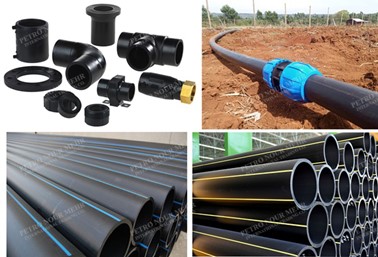
Producing different industrial and home pipes by extrusion process of polyethylene materials
Tarpaulin
Extrusion is a popular method for producing tarpaulins due to its efficiency and versatility. Raw plastic materials, such as polyethylene, are melted and forced through a die to form continuous sheets of the desired width and thickness. This seamless approach eliminates the need for stitching, resulting in a robust and waterproof finished product. Extrusion also allows for customization by adding flame retardancy, UV resistance, or certain colors. Because of its scalability, it may be manufactured in massive quantities to meet expanding demand in industries like as transportation, construction, and agriculture.
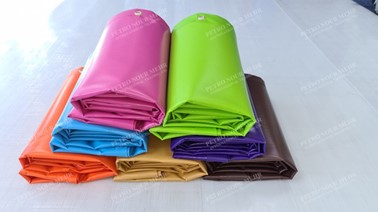
Producing polyethylene tarpaulins by extrusion process
Fishing Net
Plastic extrusion is the main method utilized to create a variety of nets, such as fishing nets, net ropes, and agricultural nets. Fishing nets are strong, portable devices that work well for catching fish in maritime environments. They profit from extruded polymers’ durability, flexibility, and resistance to corrosion.
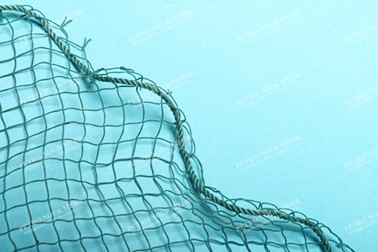
Producing polyethylene fishing net by extrusion process
Net Rope
Ropes are another output of plastic extrusion, and they are utilized in many different industries to support structures. By using this method, net ropes can be made to have specific qualities including strength, flexibility, and UV resistance. These characteristics make them suitable for use in both maritime tasks and construction projects.
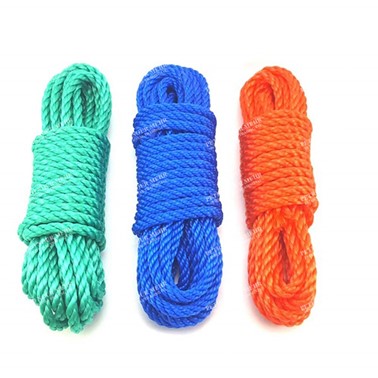
Producing polyethylene net rope by extrusion process
Agricultural Net
Additionally, plastic extrusion agricultural nets increase crop yields and quality by providing vital protection from pests, wind, and too much sunlight.
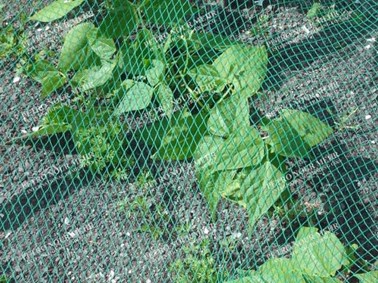
Producing polyethylene agricultural net by extrusion process
In summary, plastic extrusion enables the production of nets that are precisely tailored to meet the demanding requirements of fishing, agriculture, and construction while being reasonably priced. This ensures dependability, longevity, and effectiveness across a variety of applications.
Polypipe Group is one of the largest companies that manufacture home and industrial pipes in a variety of sizes and types utilizing the plastic extrusion method.
Petro Nour Mehr Company can supply and export materials for any of those above and other applications.
Extrusion Process
Extrusion is the process of forcing material through a die to create a desired shape. A die is a small disk with a specific size and shape of the opening.
Pellets of polymer material are fed through a hopper into an extruder. The polymer is melted and softened by heating elements that are placed over the barrel. After that, a feeding screw moves the material forward and forces it through a die—which is typically composed of steel—to take on the required shape. The product is cooled in a water bath or by forced air as it exits the die.
Polymer extrusion is a continuous process that continues as long as raw pellets are available. Extrusion is mostly used for thermoplastics, though it can also be used for thermosets and elastomers. In this case, the material in the extruder melts and heats, forming cross-links.
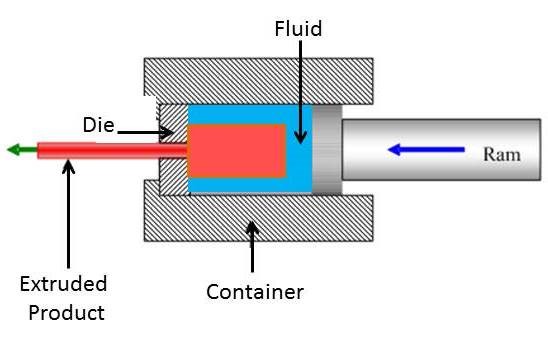
A simple schematic of the extrusion process
Advantages of Extrusion
Compared to other molding techniques, this option is significantly less expensive. The costs associated with disposal and raw materials are reduced. Plastic extrusion machines reduce the risk of inventory shortages by running continuously, allowing for 24-hour manufacturing. In addition, after leaving the extruder, plastics retain their malleability, allowing for post-extrusion modifications.
Also, products of various sizes and shapes can be molded. This method can be adjusted to meet specific design requirements and is useful for producing pipes, sheets, nets, and other products. Furthermore, because of its continuous operation, plastic extrusion is ideal for producing large quantities of products. It is the best option for large-scale production when there is a high demand.
Environmental Benefits
Significant environmental benefits of polyethylene extrusion correspond with the growing emphasis on industrial sustainability. Because HDPE is recyclable, it promotes circular economy concepts and minimizes the demand for virgin plastics. Using recycled HDPE in extrusion processes can help manufacturers decrease waste, protect natural resources, and lower their carbon footprint. Extruded goods also have a longer lifespan and require less maintenance because of HDPE’s remarkable toughness and resistance to degradation.
Challenges in Extrusion
There are some potential challenges with the extrusion process that you should be aware of:
After being removed, extruded plastic may expand. This type of expansion, known as die swell, may be unpredictable. Furthermore, the equipment and machinery can be costly. It should be noted that if you use recycled plastics, they may have inconsistent properties and contaminants, as well as be more difficult to gain, leading to additional processing.
Quality Control in Extrusion
Quality control in plastic extrusion is critical to ensuring the integrity of the finished product. As previously stated, it begins with the careful selection of the material, in which the polymer’s properties are carefully matched to the product’s specifications to obtain the desired results. Temperature control is critical throughout the extrusion process since it impacts the plastic’s viscosity and flow. Simultaneously, die design and maintenance have a significant impact on the final product’s shape and surface quality. Extrudate diameter and profile shape are two examples of properties that must be accurately regulated to attain dimensional accuracy.
Visual assessment is essential for finding defects in a product’s surface and ensuring its aesthetic attractiveness. Mechanical properties testing further validates a product’s suitability by evaluating features such as impact resistance and tensile strength. Finally, the production process is followed using traceability systems and detailed documentation, ensuring responsibility and supporting programs for continuous improvement. By employing these strict quality control measures, producers maintain high standards, increasing product dependability and market competitiveness.
Innovations in Extrusion Technology
The primary objectives of recent advances in plastic extrusion technology have been to improve processing sustainability and efficiency. One notable advance is the development of precision extrusion technology, which provides greater control over the extrusion process and generates products with more uniform dimensions and quality. This reduces material waste while also improving overall product quality, making the objects more desirable for a variety of uses.
Furthermore, innovations in die design have fundamentally altered the possibilities of extrusion by allowing for the production of finely geometrized and complex profiles. These innovative dies enhance the structural integrity and homogeneity of extruded products by utilizing optimized flow channels and improved cooling methods. These developments enable HDPE extrusions to be employed in a broader range of industries by broadening their applications.
Global Market Insights
Polyethylene products are in high demand for a multitude of reasons, including changing customer preferences, technological improvements, and regulatory changes. The demand for polyethylene items is quickly increasing in emerging countries in Asia-Pacific and Latin America, while established markets in North America and Europe continue to dominate.
- Purchase from a trustworthy provider with credentials to ensure quality.
- Compare the pricing of these materials in various markets with the global market price.
- Examine the sales conditions, including quantity, delivery time, packaging, transportation methods, and payment terms.
- Contact Petro Nour Mehr Company to acquire the best export price according to your requirements.
- Petro Nour Mehr Company provides secure and suitable payment methods based on consumer preferences.
- It’s notable that our company has contact with several reputable transportation providers which can assist you find the best solutions.
- Also, the company provides customers with the necessary documentation for customs clearance in their final city.